
loading
logo
Safrat

Turkey Travel Guide

Discover experiences and plan services around your own itinerary

Flight

Hotel

Visa

eSIM

CIP

Insurance

Flight

Hotel

Visa

eSIM

CIP

Insurance

Add Return Date

Plan your Turkey trip

Planning a trip to Turkey from abroad? Choose the places you want to experience, then arrange entry requirements, flights and accommodation around your own passport, residence and departure point.

Explore trip services

Is Turkey right for your trip?

Turkey suits travellers who pick a theme and let it set the route. Compare four different draws: Istanbul's Byzantine and Ottoman monuments, Cappadocia's rock-hewn churches and underground towns, the white travertine terraces and Greco-Roman spa ruins at Pamukkale, and the Duden waterfalls at Antalya. The tourism ministry also promotes yachting, mountain and winter-sports areas and thermal tourism. Treat these as categories to research, not proof of availability, snow, sailing conditions or treatment on your dates. UNESCO listings are a useful filter, not a full inventory of the country.

Each choice has a cost. Istanbul requires attention to pickpocketing in the main tourist areas and regular demonstrations, and UNESCO names population pressure, pollution and uncontrolled urbanisation as threats to its historic areas. Cappadocia's rock sites face erosion and UNESCO reports overuse by tourists. Pamukkale's terraces are protected, so expect set routes rather than free roaming. Summer adds heat and frequent wildfires.

The larger question is routing. The British Foreign Office (FCDO) updated its advice on 27 October 2026, describing the Middle East context as deeply unpredictable with a high risk of sudden escalation, and warning of possible flight cancellations and airspace closures. That advice is written for British nationals and is not a complete advisory for every nationality, so also read your own government's guidance. Flight disruption, however, affects anyone routing through the region. Prefer flexible fares and cancellable stays until plans are firm, and settle your own entry requirements before paying for anything non-refundable.

Which region should you choose?

These four clusters show how different a Turkish trip can be. They are starting points for choosing, not a list to complete. Every added base means another transfer and another hotel change. Ask your transport provider for current journey times before adding a stop.

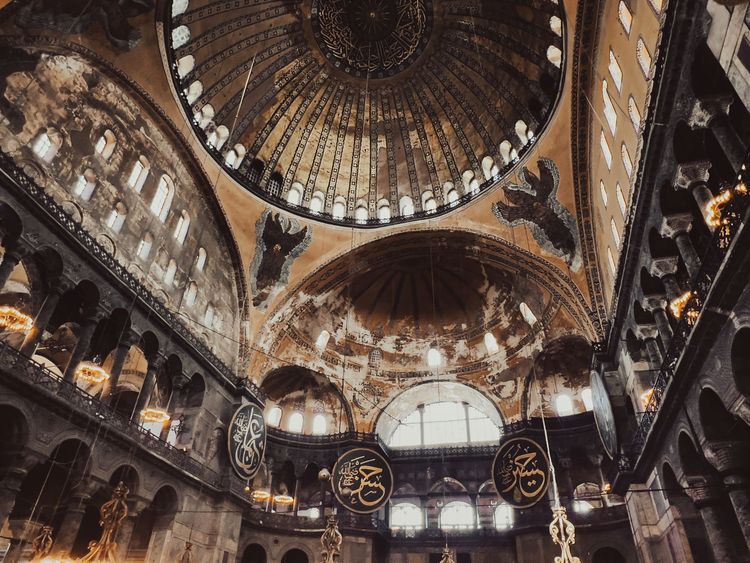
Interior of Hagia Sophia in Istanbul
Mehmet Turgut Kirkgoz / Pexels

Istanbul: the historic city

Set on the Bosphorus peninsula between the Balkans and Anatolia, Istanbul has been tied to major political, religious and artistic events for more than 2,000 years. UNESCO's historic areas comprise four areas: the Archaeological Park at the tip of the peninsula, the Süleymaniye quarter, the Zeyrek area and the land walls. Landmarks named include Hagia Sophia, the Hippodrome of Constantine, Topkapi Palace, the Blue Mosque, the Süleymaniye complex and the Chora church with its mosaics. It suits several days of walking-heavy cultural sightseeing. Downsides: FCDO reports common street robbery and pickpocketing in major tourist areas, regular demonstrations, and a 6.2-magnitude Marmara earthquake in April 2025 that was felt strongly in the city. UNESCO also lists crowding, pollution and uncontrolled urbanisation as threats.

Explore the details
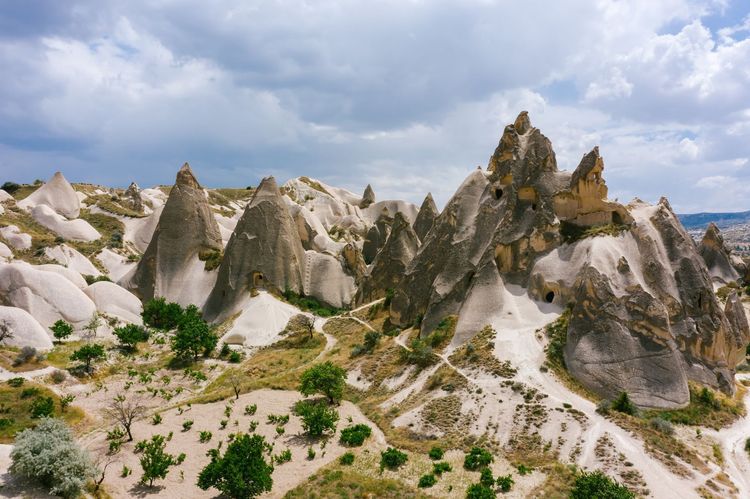
Cappadocia rock formations and rock-cut rooms
Mikhail Nilov / Pexels

Cappadocia: rock churches and underground towns

The listed area lies between Nevşehir, Ürgüp and Avanos and includes the Göreme valley, Soğanlı, and the underground cities of Kaymaklı and Derinkuyu. Its draws are eroded 'fairy chimney' landscapes, rock-hewn churches with Byzantine paintings and troglodyte villages. It suits travellers who like valley walking, small churches and landscape photography. Downsides: UNESCO reports overuse by tourists and some vandalism, and names the El Nazar, Elmalı and Meryemana churches as monuments at risk from erosion needing priority action. Confirm that each church or site you plan around is open and accessible before building a day on it.

Explore the details
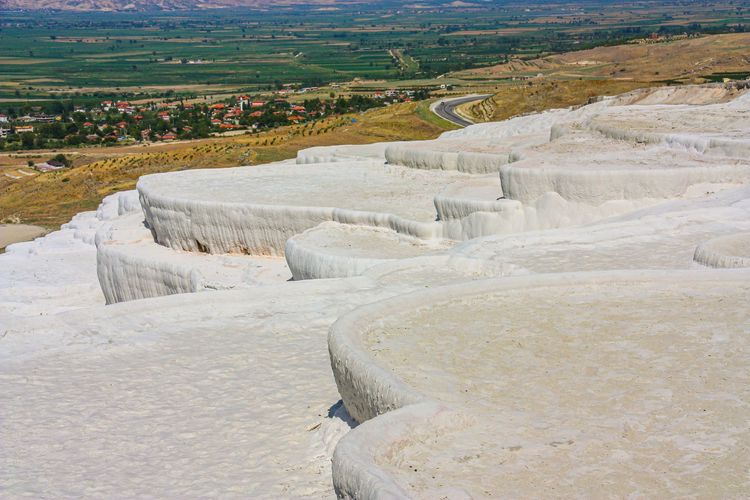
Travertine terraces at Pamukkale in Türkiye
Maciej Cisowski / Pexels

Pamukkale and Hierapolis: terraces and a Roman spa town

In Denizli Province in south-west Turkey, calcite-laden springs from a cliff of almost 200 m created petrified waterfalls and stepped basins. Beside them lie the ruins of Hierapolis, founded by the Attalid kings of Pergamon, with baths, temple remains, a theatre, a necropolis of some 2 km and early Christian monuments including the Martyrium of St. Philip. It suits a compact visit that mixes nature and archaeology. UNESCO says access to the travertine terraces is prohibited to protect water flow and colour, with visitor routes and designated bathing areas instead. It also names high visitor numbers as a main threat, especially at the small lake among the ancient columns, so check what is currently permitted before planning a swim.

Explore the details
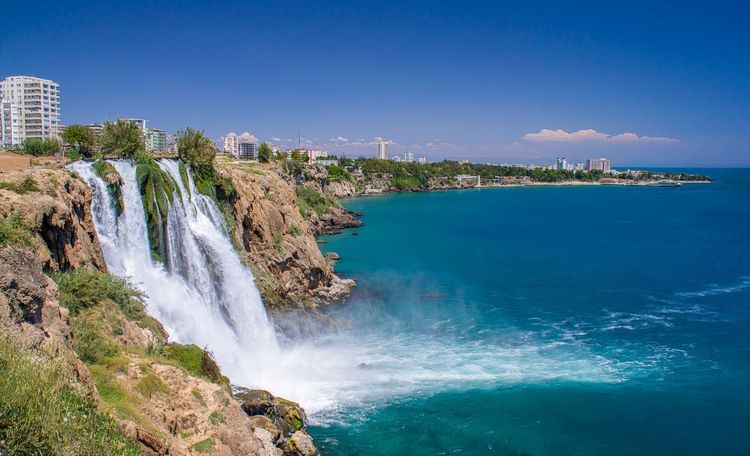
Lower Duden Waterfalls flowing into the Mediterranean in Antalya
Erik Karits / Pexels

Antalya: Lower Duden Waterfalls and the Mediterranean

The Ministry of Culture and Tourism's culture portal describes two distinct Duden falls. The Upper Duden Falls (Düdenbaşı) are in Antalya's Kepez district. The Lower Duden Falls lie east of Antalya, where the Duden stream drops from a travertine ledge of about 40 m into the Mediterranean. The portal classes the site as nature-culture tourism and says it can be reached by city transport. It suits travellers who want a water-and-coast stop in a Mediterranean city rather than a heritage-heavy programme. Decide which of the two falls you want before choosing a meeting point, and verify current access and opening arrangements locally. The photo shows the Lower Falls.

Explore the details

Services for arranging your trip

Turn your itinerary into suitable bookings: verify entry eligibility, compare transport and accommodation, then add the services you need. Service links open Safrat’s main website; availability and conditions are confirmed within the selected service.

Flights to Turkey

Search from your own departure city to the arrival city that fits your Turkey itinerary. Compare connections, baggage and the final fare.

Search flights

Where to stay in Turkey

Choose an accommodation base for your itinerary, then compare room occupancy, meals and cancellation conditions for your dates.

Explore accommodation

Turkey visa and entry planning

Check the currently available visa option against your nationality, residence and travel purpose before committing to bookings. Iraqi-passport guidance is not a universal eligibility rule; the responsible authority decides visa issuance and entry.

Review visa information

Connectivity for your trip

Match destination coverage, duration and data allowance to your trip, then check device compatibility and activation conditions.

Check plans and coverage

Travel-insurance planning

Review territory, policy dates, eligibility, benefits and exclusions before choosing. A plan name alone does not establish visa compliance or acceptance.

Review travel-insurance details

When to go and what to watch

Choose the timing around your regions and activities, with flexibility for weather-sensitive visits. FCDO notes that extreme temperatures can affect many areas over the summer months and that wildfires happen frequently in summer. For exposed sites such as Hierapolis or Cappadocia's valleys, plan early or late hours and keep a flexible day. Local authorities can order people out of accommodation during a wildfire, and lighting fires or discarding cigarettes in risk areas can bring fines or prison.

Severe rainstorms can cause flooding and landslides that damage roads and bridges and make some routes impassable, so avoid tight same-day connections between regions. Many parts of the country regularly experience earthquakes and tremors, and the Turkish disaster authority AFAD publishes seismic information. Follow your accommodation's instructions.

The ministry describes a long summer with generally mild winds as ideal for yachting, and presents high mountains and ski facilities as a separate winter offer. Choose the season by activity, then confirm with the operator what is running; promotional descriptions do not guarantee sailing weather or snow on a given date. During Ramadan shop and restaurant hours can change, and eating or drinking in public in daytime may cause offence, so ask your hotel how meals are handled.

Editorial itinerary options

These are editorial planning ideas, not sold packages or verified schedules. Nights are suggestions only. Confirm transfer methods and timings with your provider before booking stays in more than one region.

Istanbul only: about four nights

An editorial option for fewer transfers: around four nights in Istanbul, choosing a small set of monuments each day, such as Hagia Sophia, Topkapi Palace or the Hippodrome, followed by a separate day for other interests such as Süleymaniye, Zeyrek, the land walls or Chora. This is a pacing idea, not a verified walking route or geographical grouping. Keep spare time for closures or rest and protect valuables in tourist areas.

Explore the details

Istanbul plus Cappadocia: about five to six nights

Roughly three nights in Istanbul and two to three in Cappadocia. In Cappadocia, give one day to the Göreme valley and its painted churches, one to an underground city (Kaymaklı or Derinkuyu), and one flexible day for villages around Ürgüp or Avanos. The trade-off is the transfer between the two bases, which eats into a short trip. Fix the transfer method and timing before you book the second hotel, and confirm access to each site you rely on.

Explore the details

Three stops: about nine nights

An editorial option of around four nights in Istanbul, three in Cappadocia and two near Pamukkale. Confirm transfers before paying for hotels, and remove a stop if the timetable feels rushed. Follow Pamukkale's current designated visitor routes and conservation rules rather than assuming access to every terrace. Travellers preferring a Mediterranean setting can consider substituting Antalya for one stop once the transfer is confirmed.

Explore the details

Where to base yourself

Choose a base by the sites you want and how you will reach them:

  • Istanbul: if monuments are the point, stay near the historic areas UNESCO describes: the tip of the peninsula, Süleymaniye, Zeyrek or the land walls. Check the hotel's exact location on a map against your priorities.
  • Cappadocia: UNESCO names Göreme, Ortahisar, Çavuşin, Ürgüp and Mustafapaşa among towns under growth control, and says hotel developments are meant to respect room-capacity limits. Do not assume unlimited rooms in peak periods; check actual availability rather than relying on photos.
  • Pamukkale: UNESCO says hotel buildings on site were removed and tourist facilities are restricted to the edge of the monumental area, with visitor centres at the northern and southern entrances. Stay outside the site and ask the hotel how to reach an entrance.
  • Antalya: the Lower Duden Falls lie east of the city and the Upper Falls are in Kepez, so pick a base according to which falls you want and how you will get around.
  • On the water: the ministry promotes yacht and gulet cruising, with marinas and bays along the coast. Treat that as a separate trip type to research with a licensed operator.

If you travel with under-18s, check the hotel's policy: FCDO reports hotels refusing unaccompanied minors without written, sometimes notarised, parental consent. You can compare options on the hotel search page, but a general link does not prove inventory in any town, so check exact results, location and conditions.

For Duden visits in Antalya, distinguish the Upper falls in Kepez from the Lower falls on the Mediterranean when checking a property's address and arrival plan. Confirm the actual transport and route rather than assuming a hotel is close to both.

Money and budgeting

Build your budget from separate components: flights from your departure point, accommodation, transfers between regions, site and permit fees, organised activities, insurance and connectivity. Request quotes for your actual dates and party, and check what each price includes. Ask your bank about foreign card fees and withdrawal limits, and ask each hotel and operator what payment methods they take.

Cash rules from FCDO's description of Turkish regulations: there is no limit on foreign currency or Turkish lira brought in. Turkish lira worth more than 5,000 US dollars may not be taken out, and other currency above that value must be declared to customs, with possible questions about its origin. FCDO also says banks and exchange offices may not accept 50 or 100 US dollar notes because of a reported surge in counterfeits, so check which notes your exchange point accepts. Be wary of strangers who approach you to change money.

For motorbike or quad-bike hire, FCDO warns that the hire company's insurance may cover third parties only and that you may be charged for damage to the vehicle. Check activity-specific cover before hiring. Price in proper cover before booking.

Getting there and getting around

Flights are the first risk to manage. FCDO tells travellers through the Middle East to expect possible cancellations, airspace closures and disruption. Before you pay, read the change and cancellation terms and compare options on the flight search page, bearing in mind that a general link does not prove a route or fare on your dates.

  • Taxis: FCDO calls accepting lifts from unofficial taxi drivers highly risky. Use a registered taxi, note its registration number and make sure the meter is on. App-based and pre-booked taxis are widely available.
  • Roads: roads between major cities are generally excellent but can be poor in remote areas, accidents are common, and night driving needs extra care. Expect police checkpoints on main roads and approach them slowly.
  • Driving licence: permit and licence rules depend on where your licence was issued. Confirm with the rental company and Turkish authorities before booking. Mopeds need a suitable licence category and helmets for rider and passenger.
  • Identity: carrying some form of photographic ID is a legal requirement. FCDO separately advises always carrying your passport or residence permit, and ID checks are possible in busy areas, particularly Istanbul.
  • Pamukkale: private vehicles may not enter the site except for emergencies, and public transport is provided for visitors.
  • Greek island day trips: the EU Entry/Exit System applies to non-EU nationals travelling from Turkey into the EU by land, sea or air, and may add waiting time. Greek entry conditions for your own passport are a separate question.

Staying connected and eating well

Connectivity: FCDO says access to some e-sim services is restricted in Turkey and tells travellers to check with their provider before leaving. Before buying, confirm that your phone is compatible and that the plan works inside Turkey. You can browse the eSIM page for options, but check exact coverage before relying on it. Keep a fallback, such as a physical SIM or hotel Wi-Fi, because you will want maps and taxi apps working on arrival.

Food and drink: If you have halal, allergy or other dietary needs, ask about ingredients directly rather than assuming a venue suits you. Consider drink safety too:

  • Buy your own drinks and keep them in sight. FCDO warns that food or drink offered by strangers could be spiked, and to be wary of strangers who invite you to a restaurant or nightclub.
  • FCDO reports deaths and serious illness from methanol in illegally produced spirits and counterfeit branded alcohol in Turkey, including Ankara and Istanbul. It cannot be detected by taste or smell and even small amounts can kill.
  • Smoking is banned on public transport and in indoor public places and workplaces.

On medicines, FCDO says some common ones are controlled in Turkey and British prescriptions are not accepted in Turkish pharmacies. Do not assume your home prescription will be honoured; ask the Turkish embassy or consulate about documentation for regular medication.

Cautions and current warnings

The UK Foreign, Commonwealth & Development Office (FCDO), in advice updated 27 October 2026, advises against travel within 10 km of the Syrian border and notes possible road closures in Hatay towards it. It also describes permit requirements near the Iraqi and Iranian borders in Hakkari and for Mount Ararat. Check the current route and the Turkish requirements before planning those visits; British advice is not a complete advisory for every nationality.

FCDO reports terrorism risks and demonstrations that can turn violent or disrupt transport. Protect valuables in Istanbul's tourist areas and choose providers and transport you can identify. It reports assaults in some coastal resorts, including by hotel or spa staff. Avoid protests and follow local authorities' instructions.

Check operator credentials, equipment and insurance before adventure or water activities. Do not swim under a red flag, be careful around stray dogs, and seek independent professional advice before any medical treatment. Review local laws on antiquities, drugs and photography; do not photograph military installations. The emergency number is 112. Confirm treatment and evacuation cover with your own insurer rather than assuming entitlement from a health card.

Entry requirements

Entry rules in Turkey depend on your passport, so do not borrow another nationality's exemption or period of stay. The FCDO page describes rules for British citizen passport holders travelling from the UK and says Turkish authorities set and enforce entry rules. Confirm your own position with the Turkish embassy or consulate, or official Turkish channels, covering visa need, passport validity and permitted stay, before paying for anything non-refundable.

If you want help with an application, you can read the Turkey visa service page, but check that the option fits your passport, circumstances and dates; a service link does not confirm eligibility or approval.

Review current Turkish customs rules and declare goods that may be prohibited or dutiable, and controlled drugs, firearms, offensive weapons, endangered species and indecent material are among the prohibited goods. If your route includes another country, check its entry and transit rules separately. Choose travel insurance that matches your route and activities, read exclusions on adventure sports, and confirm how your policy treats travel against your own government's advice.

Family, accessibility and individual needs

Ask the property or activity provider for written confirmation of a cot, connecting rooms, wheelchair access or airport assistance when needed. Check steps, walking, lifts and vehicle arrangements; photographs or star classification alone do not establish suitability.

Check current official guidance on health, safety, medicines and customs for your circumstances. A tourism description is not a safety guarantee, medical advice or permission to carry a medicine.

Entry Requirements & Visas

Check the currently available visa option against your nationality, residence and travel purpose before committing to bookings. Iraqi-passport guidance is not a universal eligibility rule; the responsible authority decides visa issuance and entry.

Getting Around
Getting Around

Arrange transport between your itinerary stops, checking arrival times and booking arrangements before committing to accommodation in several places.

Money & Connectivity

Check local currency, card charges and payment arrangements, then match a data plan to your destination, device and trip length.

Destination places in pictures

Istanbul

Consider Istanbul if it fits your itinerary, then check access, accommodation location and visitor arrangements before booking.

See hotels in Istanbul →

Antalya

Consider Antalya if it fits your itinerary, then check access, accommodation location and visitor arrangements before booking.

See hotels in Antalya →

Trabzon

Consider Trabzon if it fits your itinerary, then check access, accommodation location and visitor arrangements before booking.

See hotels in Trabzon →

Bursa

Consider Bursa if it fits your itinerary, then check access, accommodation location and visitor arrangements before booking.

See hotels in Bursa →

More travel ideas for Turkey

Further reading to help choose experiences and shape your itinerary. Recheck changing requirements with the responsible authority before booking.

Top 10 Natural Places Recommended to Visit in Turkey

Explore ideas that fit your interests, then check current opening details and access before arranging your itinerary.

Read the guide

Top 10 Historical Places Recommended to Visit in Turkey

Explore ideas that fit your interests, then check current opening details and access before arranging your itinerary.

Read the guide

10 of the Most Beautiful Unique Experiences Recommended in Turkey

Explore ideas that fit your interests, then check current opening details and access before arranging your itinerary.

Read the guide

Before confirming a booking

Use these answers when comparing options. Confirm current prices, availability and product-specific conditions within the service itself.

Travel questions about Turkey

Do I need a visa for Turkey?

It depends on your passport. The FCDO page only describes rules for British citizen passport holders, so do not apply them to other nationalities. Check with the Turkish embassy or consulate or official Turkish channels before booking anything non-refundable.

Which region should I start with on a short trip?

Istanbul suits several days of monument-focused sightseeing, Cappadocia suits valley and rock-church exploration, and Pamukkale suits a compact nature-and-archaeology stop. Pick one or two rather than squeezing in all of them.

Is Turkey safe to visit right now?

FCDO's update of 27 October 2026 advises against all travel within 10 km of the Syrian border and warns of regional tensions, terrorism risk and demonstrations. It also warns of possible flight disruption. That is British advice, so read your own government's guidance too.

Can I walk on the Pamukkale terraces?

UNESCO says visitor access to the travertine terraces is prohibited to protect water flow, colour and structure, with visitor routes and designated bathing areas provided. Follow the rules on site.

What is the difference between the Upper and Lower Duden Falls?

The ministry's culture portal places the Upper Duden Falls (Düdenbaşı) in Antalya's Kepez district and describes the Lower Falls east of the city dropping about 40 m into the Mediterranean. Choose which you want and verify current access locally.

Do I have to carry my passport?

FCDO says carrying some form of photographic ID is a legal requirement and separately advises always carrying your passport or residence permit. ID checks can happen in busy areas, particularly Istanbul.

Will an eSIM work in Turkey?

FCDO says access to some e-sim services is restricted in Turkey. Check with your provider before travelling and keep a fallback such as a physical SIM or hotel Wi-Fi.

Are the EHIC and GHIC valid in Turkey?

Do not assume so. FCDO says the European Health Insurance Card and Global Health Insurance card are not valid in Turkey. Arrange suitable travel insurance for local treatment and medical evacuation.

Should I rent a car or use taxis?

Roads between major cities are generally excellent, but accidents are common and remote roads can be poor. Check which licence your rental company accepts. For taxis, use registered, metered cars or apps and avoid unofficial drivers.

Sources and updates

Content reviewed on 3 November 2026 using the dated sources below. Recheck current requirements before booking; prices, availability and operating conditions change. Suggested itineraries are planning options, not sold packages.